
Hotels
Occupancy, breakfast service, groups and restaurant covers should be reflected in measured food waste rather than a room-based estimate.
High-footfall OWC guide · Amritsar
Amritsar’s hotels, restaurants, institutions and event kitchens can experience sharp visitor-driven food-service peaks. Good OWC planning therefore separates a normal kitchen day from weekend, group-tour or function load instead of sizing from room count.
Amritsar planning tool
Choose the service pattern, set your measured normal load and see how a recurring higher-footfall day changes the capacity shortlist.
Amritsar buyer fit
Amritsar buyers should start with the organic stream they actually generate and the way that stream moves through the property.
Occupancy, breakfast service, groups and restaurant covers should be reflected in measured food waste rather than a room-based estimate.
Daily kitchen prep can be fairly measurable; weekend and tourist surges should be logged as a separate recurring pattern.
Event kitchens can generate concentrated organic peaks that need a capacity or operating plan of their own.
Large kitchens and dining halls benefit from clearly labelled organic collection before waste leaves the food-service area.
Amritsar operating reality
Amritsar has its own operating details to resolve before a quotation becomes an installation plan.
A compact high-turnover restaurant can generate more suitable organic waste than a much larger low-occupancy property. Weighing beats visual assumptions.
If tour groups or events regularly increase food service, capture a representative peak rather than averaging it away.
Kitchen packaging, foil, glass and other dry items should be removed at source so the OWC receives only the intended biodegradable material.
COMPOSTO range for Amritsar
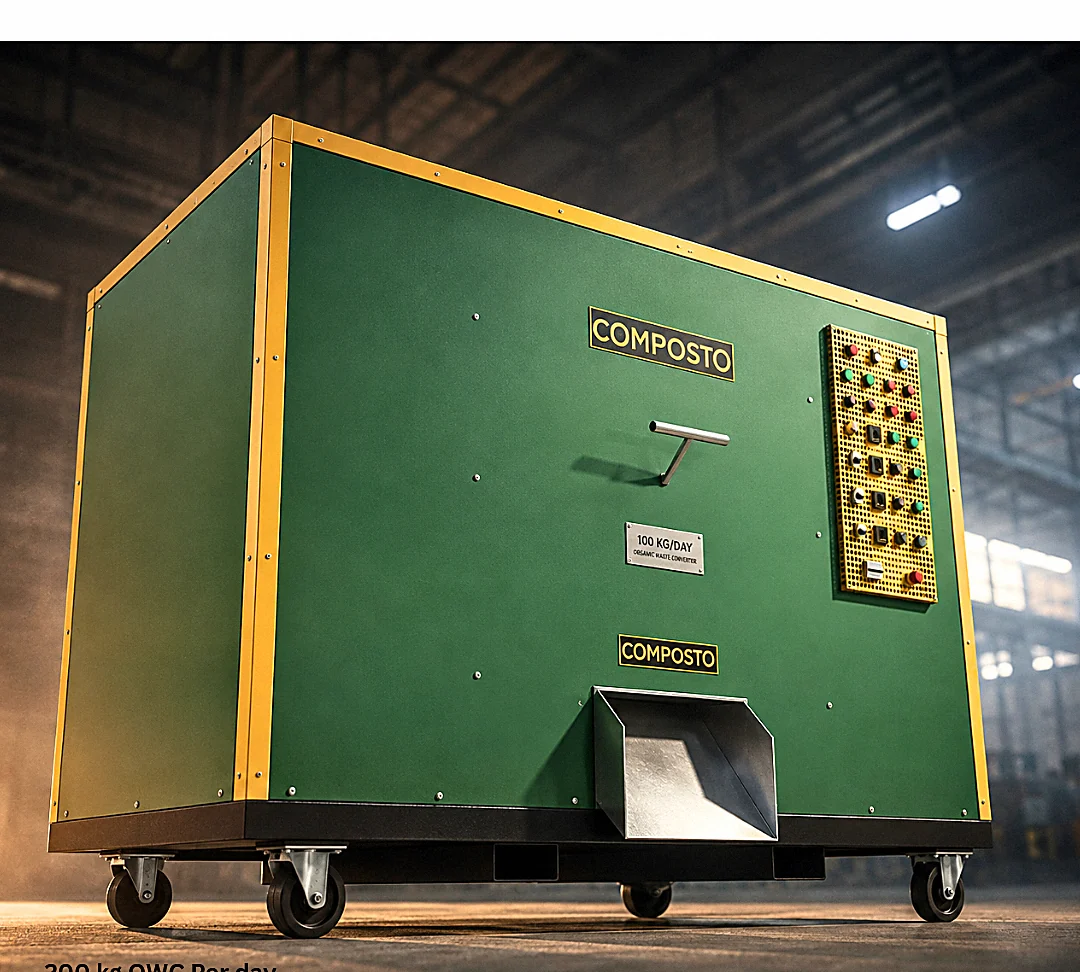
Use measured organic waste from Amritsar to shortlist a capacity, then open its product page for dimensions, connected load, construction and controls.
Amritsar waste-management context
For Amritsar, the machine is one processing component; segregation, operator responsibility and the routes for other waste streams remain equally important.
Read the national 2026 framework alongside current Amritsar directions. For Amritsar, let the rule define responsibilities while measured organic-waste data determines the equipment shortlist.
Hotels, restaurants, institutions and other qualifying properties should check current Bulk Waste Generator duties under the Solid Waste Management Rules, 2026 and applicable municipal directions. On-site processing works only with disciplined source segregation.
Amritsar site planning
For Amritsar, delivery access, utility-space conditions and the operating routine should be clear before the final installation plan is locked.
Share the Amritsar locality, normal measured wet-waste load, recurring surge pattern, delivery access and proposed machine zone. That helps separate a routine kitchen requirement from a genuinely peak-driven one.
No. Occupancy, meal plan, restaurant covers, group bookings and events can make hotels with the same room count produce very different organic-waste weights.
Use several representative normal days and include a recurring busy day if weekends or tourist footfall materially change the load.
Not as a general rule. Keep dry packaging and non-organic items outside the segregated organic stream.
Treat it as a recurring operating condition and discuss whether extra capacity, scheduling or another site-specific plan is appropriate.
Published price guidance is available in Organic Waste Converter Price; use the Amritsar operating planner above to judge load pattern and capacity fit.
Amritsar quotation checklist
For Amritsar, share the facility type, measured daily organic-waste quantity and the site conditions that affect installation. Those Amritsar inputs are enough to identify the COMPOSTO capacity worth reviewing first.


