
Industrial canteens
Shift schedules produce repeatable meal windows; suitable organic waste should remain separate from production and hazardous streams.
Statewide OWC guide · Punjab
Punjab is not one single buyer profile. Industrial canteens in Ludhiana, hospitality kitchens in Amritsar, institutions around Jalandhar and commercial facilities across Mohali or Patiala create different organic-waste patterns, even when the daily kilogram figure looks similar.
Punjab planning tool
Switch between industrial, hospitality, institutional and residential use, then add the measured daily waste to see the first capacity worth comparing.
Punjab buyer fit
Punjab buyers should start with the organic stream they actually generate and the way that stream moves through the property.
Shift schedules produce repeatable meal windows; suitable organic waste should remain separate from production and hazardous streams.
Hotels, restaurants and large kitchens need direct weighing because covers and occupancy fluctuate.
Central kitchens can be measured independently while regulated or non-organic waste stays outside the OWC route.
Housing projects need strong source segregation and a practical collection route to a central processing point.
Punjab operating reality
Punjab has its own operating details to resolve before a quotation becomes an installation plan.
A factory in Ludhiana and a hotel in Amritsar may both report 150 Kg/day, yet their peaks, staffing and collection workflow can be very different.
COMPOSTO machines are for suitable biodegradable organic waste. They do not replace treatment systems for chemical, process, hazardous or liquid industrial waste.
Punjab-wide enquiries should include city, pin-area access, site readiness and daily waste rather than relying on a generic statewide freight assumption.
COMPOSTO range for Punjab
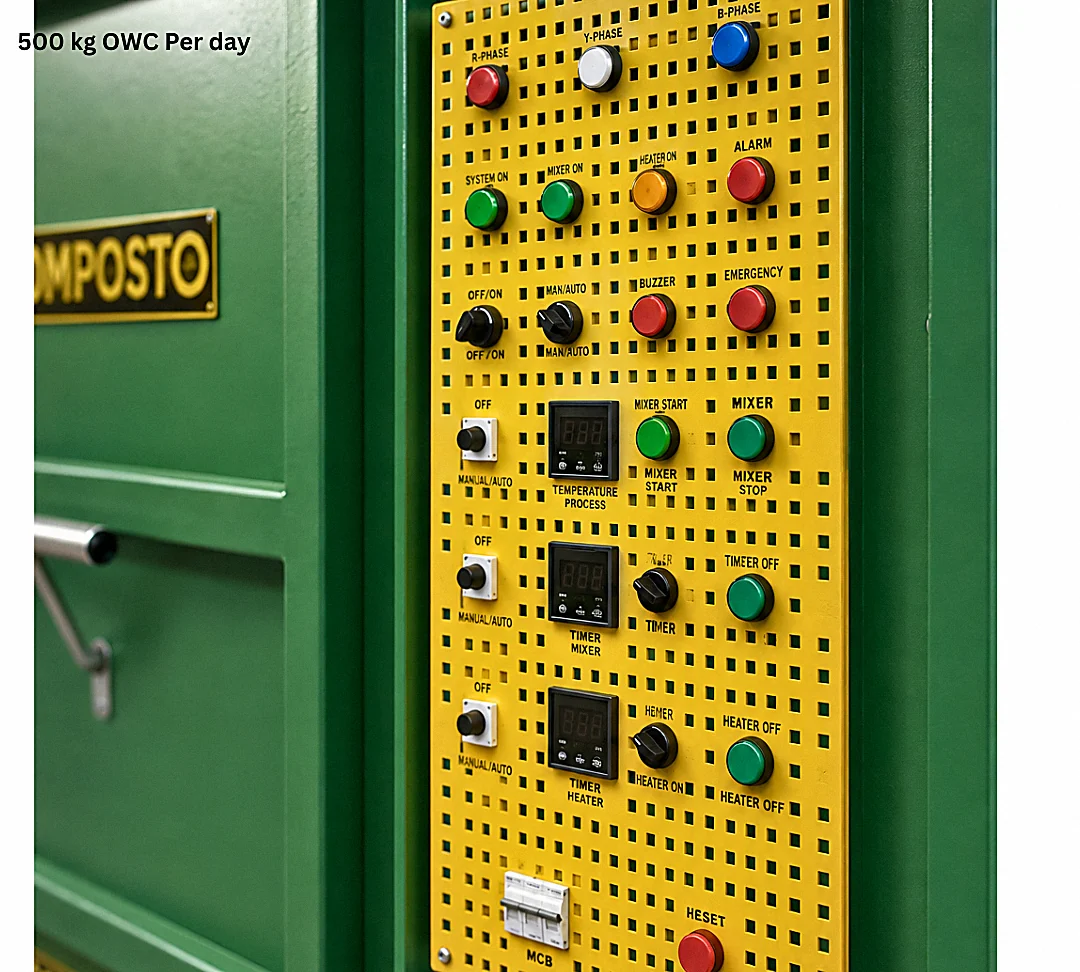
Use measured organic waste from Punjab to shortlist a capacity, then open its product page for dimensions, connected load, construction and controls.
Punjab waste-management context
For Punjab, the machine is one processing component; segregation, operator responsibility and the routes for other waste streams remain equally important.
Read the national 2026 framework alongside current Punjab directions. For Punjab, let the rule define responsibilities while measured organic-waste data determines the equipment shortlist.
Punjab buyers should assess Bulk Waste Generator applicability under the Solid Waste Management Rules, 2026 and any current local directions. A robust system separates organic processing from dry recyclables, sanitary waste and industrial streams.
Punjab site planning
For Punjab, delivery access, utility-space conditions and the operating routine should be clear before the final installation plan is locked.
For statewide planning, share the city, property category, measured organic load, access conditions and whether the site is industrial, institutional, hospitality or residential. That gives the quotation a real local operating context.
Because the state includes very different property types and operating patterns. Capacity should follow measured daily organic waste at the actual site.
No. Process, chemical and hazardous waste require their own compliant route. The OWC is for suitable biodegradable organic material.
Weigh the segregated organic waste from each meal or shift over representative normal days, then total the daily load and note recurring peaks.
Yes for logistics, access and service planning, but not for inventing capacity. Capacity still comes from measured waste and site conditions.
Dedicated pages are available for Ludhiana, Amritsar, Jalandhar and Patiala, while this state page covers the broader Punjab selection context.
Punjab quotation checklist
For Punjab, share the facility type, measured daily organic-waste quantity and the site conditions that affect installation. Those Punjab inputs are enough to identify the COMPOSTO capacity worth reviewing first.


