
City hotels
Kitchen waste can be measured daily; covered collection and a clear utility route help through wet-season operations.
Rain + distance OWC guide · Assam
Assam can combine heavy seasonal rain, widely distributed sites and hospitality properties ranging from Guwahati hotels to nature-focused resorts. Local OWC planning should therefore include the last-mile route, covered utility conditions and service access—not only the machine capacity.
Assam planning tool
Choose the access condition, confirm wet-season readiness and add measured organic waste to see the first capacity to compare.
Assam buyer fit
Assam buyers should start with the organic stream they actually generate and the way that stream moves through the property.
Kitchen waste can be measured daily; covered collection and a clear utility route help through wet-season operations.
Remote access and environmental sensitivity make source segregation and local processing especially practical.
Campus dining produces predictable organic streams that can be managed with a fixed operator routine.
Suitable food waste should be isolated from all process and hazardous streams before it enters the OWC route.
Assam operating reality
Assam has its own operating details to resolve before a quotation becomes an installation plan.
A site can be near a major road on a map but still have restricted final access, seasonal road conditions or limited unloading space.
Use real kilograms for sizing, then separately check roof cover, drainage, electrical protection and access.
On-site processing can reduce the amount of putrescible material waiting for transport, provided the property maintains a clean segregated stream.
COMPOSTO range for Assam
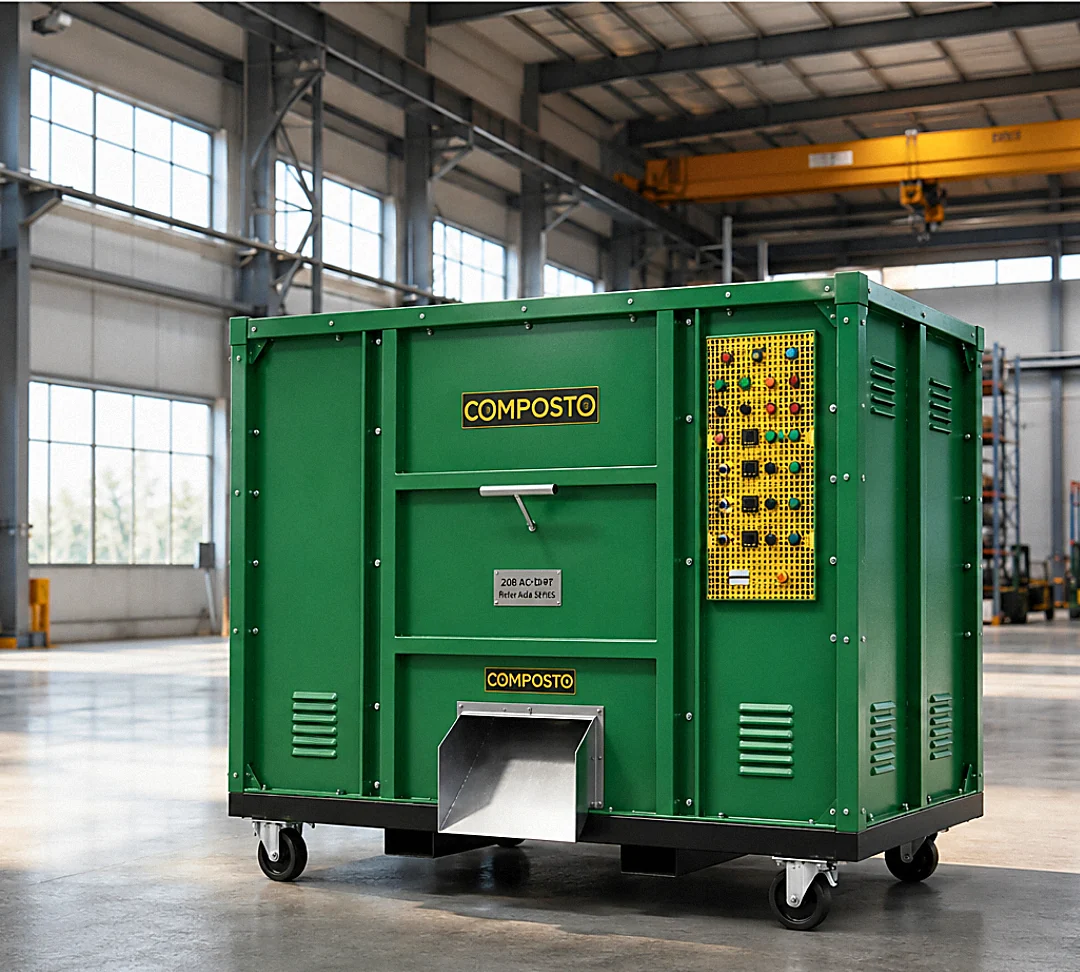
Use measured organic waste from Assam to shortlist a capacity, then open its product page for dimensions, connected load, construction and controls.
Assam waste-management context
For Assam, the machine is one processing component; segregation, operator responsibility and the routes for other waste streams remain equally important.
Read the national 2026 framework alongside current Assam directions. For Assam, let the rule define responsibilities while measured organic-waste data determines the equipment shortlist.
Assam properties should review current state and local directions together with the Solid Waste Management Rules, 2026. Environmental sensitivity does not justify mixing waste streams; source segregation remains the foundation.
Assam site planning
For Assam, delivery access, utility-space conditions and the operating routine should be clear before the final installation plan is locked.
Share the Assam location, nearest town, final access route, measured organic load, covered utility arrangement and whether wet-season access differs from dry-season access. This helps plan freight and installation realistically.
Because final access, unloading and seasonal road conditions can affect installation planning even when the model itself is already selected.
No. Use measured organic waste for capacity; rain influences site protection, drainage, electrical readiness and logistics.
They can reduce the amount of suitable organic waste sent off-site when segregation and operation are managed correctly.
No. Keep process, chemical and hazardous streams completely separate.
Use All Models and the dedicated 500 Kg/day and 1000 Kg/day product pages for detailed specifications.
Assam quotation checklist
For Assam, share the facility type, measured daily organic-waste quantity and the site conditions that affect installation. Those Assam inputs are enough to identify the COMPOSTO capacity worth reviewing first.


