
Hotels
Occupancy and breakfast/restaurant service can create a strong seasonal curve.
Seasonal-hospitality OWC guide · Manali
Manali’s hospitality load changes with tourist seasons, long weekends and group travel. For hotels, homestays and resorts, a useful OWC shortlist comes from comparing measured off-season and peak-season kitchen waste—not from choosing a single “hotel size” rule.
Manali planning tool
Compare off-season, regular and peak hospitality load, then use the measured kilograms for the capacity shortlist.
Manali buyer fit
Manali buyers should start with the organic stream they actually generate and the way that stream moves through the property.
Occupancy and breakfast/restaurant service can create a strong seasonal curve.
Multiple dining outlets or event lawns may add recurring high-load periods that deserve separate measurement.
Smaller properties may need compact capacity, but only if their actual segregated organic load supports it.
Daily preparation waste is straightforward to weigh, while tourist weekends should be logged separately.
Manali operating reality
Manali has its own operating details to resolve before a quotation becomes an installation plan.
A low off-season number can understate the requirement, while one exceptional holiday can overstate it. Record both regular and repeatable peak conditions.
The town address is not enough for hill logistics. Access width, unloading point and the path to the utility zone should be confirmed.
Covered placement, cleaning and operator discipline remain important regardless of season.
COMPOSTO range for Manali
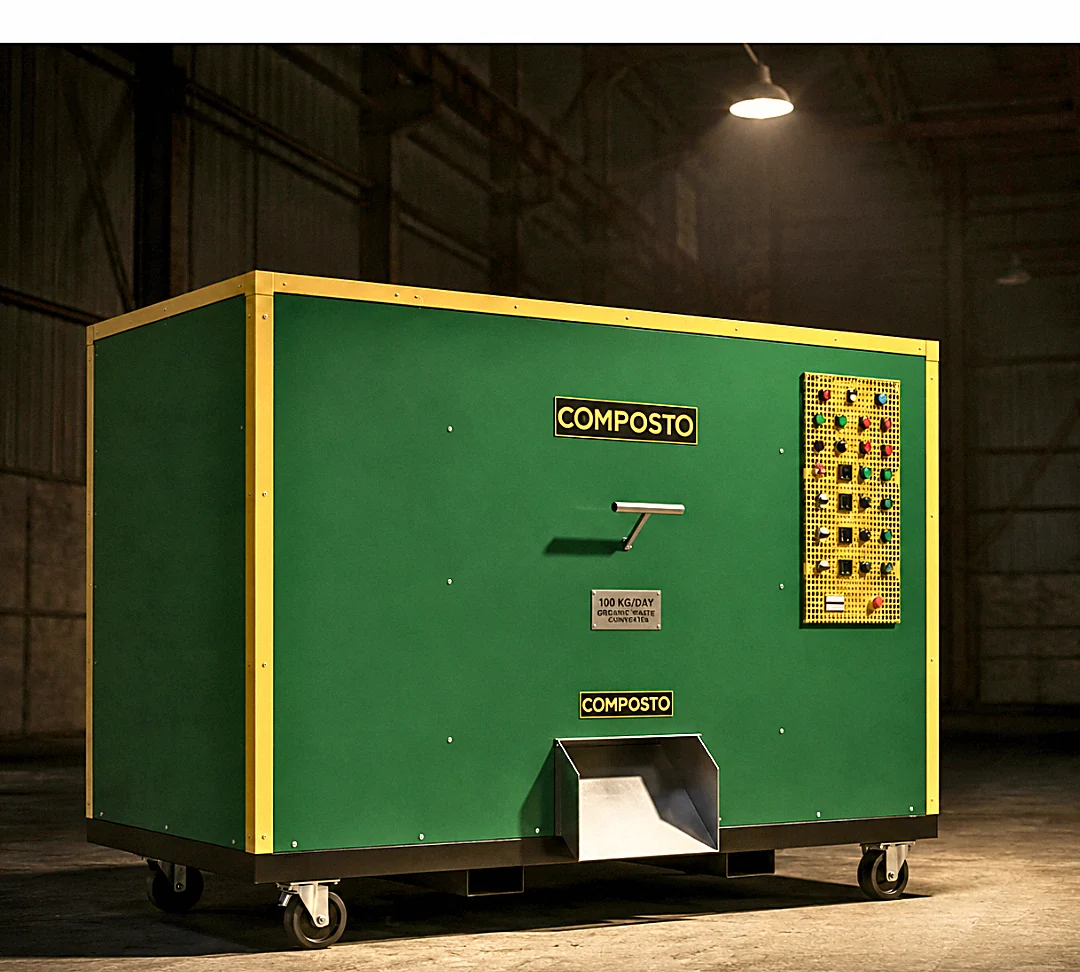
Use measured organic waste from Manali to shortlist a capacity, then open its product page for dimensions, connected load, construction and controls.
Manali waste-management context
For Manali, the machine is one processing component; segregation, operator responsibility and the routes for other waste streams remain equally important.
Read the national 2026 framework alongside current Manali directions. For Manali, let the rule define responsibilities while measured organic-waste data determines the equipment shortlist.
Hospitality and institutional properties should review current local requirements and the Solid Waste Management Rules, 2026. On-site processing can reduce organic material sent into the municipal chain, but it works only with source segregation.
Manali site planning
For Manali, delivery access, utility-space conditions and the operating routine should be clear before the final installation plan is locked.
Send the Manali locality, access route, measured regular load, repeatable peak load and proposed machine area. A short video of the last approach and unloading point is useful where roads or slopes are tight.
Compare both. The right choice depends on how often the peak recurs, how large it is and how the site plans to operate through it.
No. Meal plan, occupancy, restaurant covers and events change actual waste independently of room count.
Because hill-road width, slopes, unloading and the final movement path can affect installation even when the postal address looks straightforward.
Keep dry and non-organic packaging outside the organic stream unless a specific material is confirmed suitable.
Use All Models or the individual 15–1000 Kg/day pages for detailed machine information.
Manali quotation checklist
For Manali, share the facility type, measured daily organic-waste quantity and the site conditions that affect installation. Those Manali inputs are enough to identify the COMPOSTO capacity worth reviewing first.


