
Hotels
Occupancy and food service can rise sharply in season; measurement should include a representative busy period.
Tourism + hill-access OWC guide · Shimla
Shimla hotels and institutions operate where tourism peaks, steep access and limited back-of-house space can all affect waste handling. A useful OWC plan asks how long a property can comfortably hold organic waste if external collection is delayed—and how much it actually generates each day.
Shimla planning tool
Choose how many days of external collection disruption you want the organic stream to tolerate, then use your measured daily load to shortlist on-site capacity.
Shimla buyer fit
Shimla buyers should start with the organic stream they actually generate and the way that stream moves through the property.
Occupancy and food service can rise sharply in season; measurement should include a representative busy period.
Limited storage and frequent food preparation make clean source segregation especially important.
Dining facilities usually have steadier schedules and can plan operator routines around fixed meal times.
Space, access and internal movement often matter more than a generic citywide recommendation.
Shimla operating reality
Shimla has its own operating details to resolve before a quotation becomes an installation plan.
Organic waste is the stream most sensitive to delayed movement. On-site processing reduces how much putrescible material has to wait for external pickup.
A machine may need to sit at the most accessible utility point rather than the visually most convenient one. Check stairs, ramps, service lanes and unloading.
If a hotel’s busy-season organic load is recurrent, it should be compared explicitly with normal-season measurement rather than hidden in a yearly average.
COMPOSTO range for Shimla
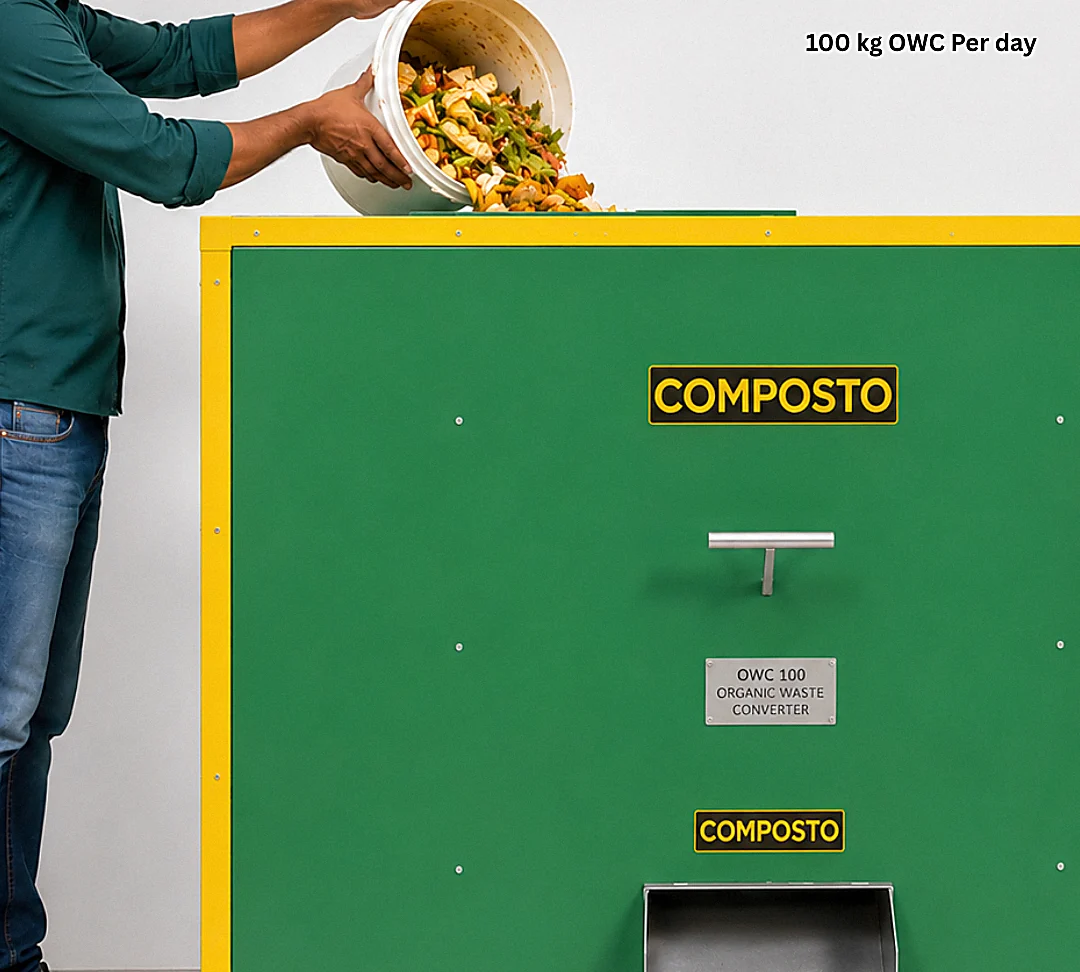
Use measured organic waste from Shimla to shortlist a capacity, then open its product page for dimensions, connected load, construction and controls.
Shimla waste-management context
For Shimla, the machine is one processing component; segregation, operator responsibility and the routes for other waste streams remain equally important.
Read the national 2026 framework alongside current Shimla directions. For Shimla, let the rule define responsibilities while measured organic-waste data determines the equipment shortlist.
Shimla properties should follow current municipal guidance and the Solid Waste Management Rules, 2026. On-site processing can make organic-waste handling more resilient, while dry recyclables, sanitary waste and rejects continue on their appropriate routes.
Shimla site planning
For Shimla, delivery access, utility-space conditions and the operating routine should be clear before the final installation plan is locked.
Share the locality, measured organic load, access constraints, utility-space dimensions and whether the site depends on a narrow road or manual internal movement. For hill properties, installation planning should happen before the machine is dispatched.
Access, limited utility space, seasonal occupancy and the practical impact of delayed waste movement can all matter more.
The preferred approach is to minimise storage of putrescible organic waste through disciplined collection and on-site processing where appropriate.
Measure a representative busy period and compare it with normal operations. Recurring peaks deserve planned headroom.
That depends on model dimensions and the exact route. Provide access measurements or a video before finalising the installation plan.
Use Organic Waste Converter Price for published price guidance; use the Shimla planner above for seasonal load, access and operating resilience.
Shimla quotation checklist
For Shimla, share the facility type, measured daily organic-waste quantity and the site conditions that affect installation. Those Shimla inputs are enough to identify the COMPOSTO capacity worth reviewing first.


