
Universities & hostels
Breakfast, lunch and dinner can be weighed as separate windows, revealing which meal drives the daily peak.
Meal-schedule OWC guide · Patiala
Patiala’s educational campuses, hostels, hospitals, clubs and banquet kitchens often have clearly defined meal or event schedules. That makes time-of-day measurement a practical way to understand the organic stream before choosing an OWC capacity.
Patiala planning tool
Select the active meal periods, enter the measured daily organic total and identify the capacity to compare first.
Patiala buyer fit
Patiala buyers should start with the organic stream they actually generate and the way that stream moves through the property.
Breakfast, lunch and dinner can be weighed as separate windows, revealing which meal drives the daily peak.
Kitchen organics can follow a controlled route, completely separate from biomedical and sanitary waste.
Functions create intermittent but high-volume kitchen periods that should be recorded separately from quiet days.
A dominant lunch service may account for most of the day’s suitable organic load, making measurement straightforward.
Patiala operating reality
Patiala has its own operating details to resolve before a quotation becomes an installation plan.
Instead of one unexplained daily number, a site can see whether breakfast, lunch, dinner or an event kitchen creates the main loading period.
Academic breaks and seasonal occupancy shifts should be noted so the selected system reflects real operating months.
A single very large function should not automatically dictate capacity; the recurring event calendar provides better purchasing context.
COMPOSTO range for Patiala
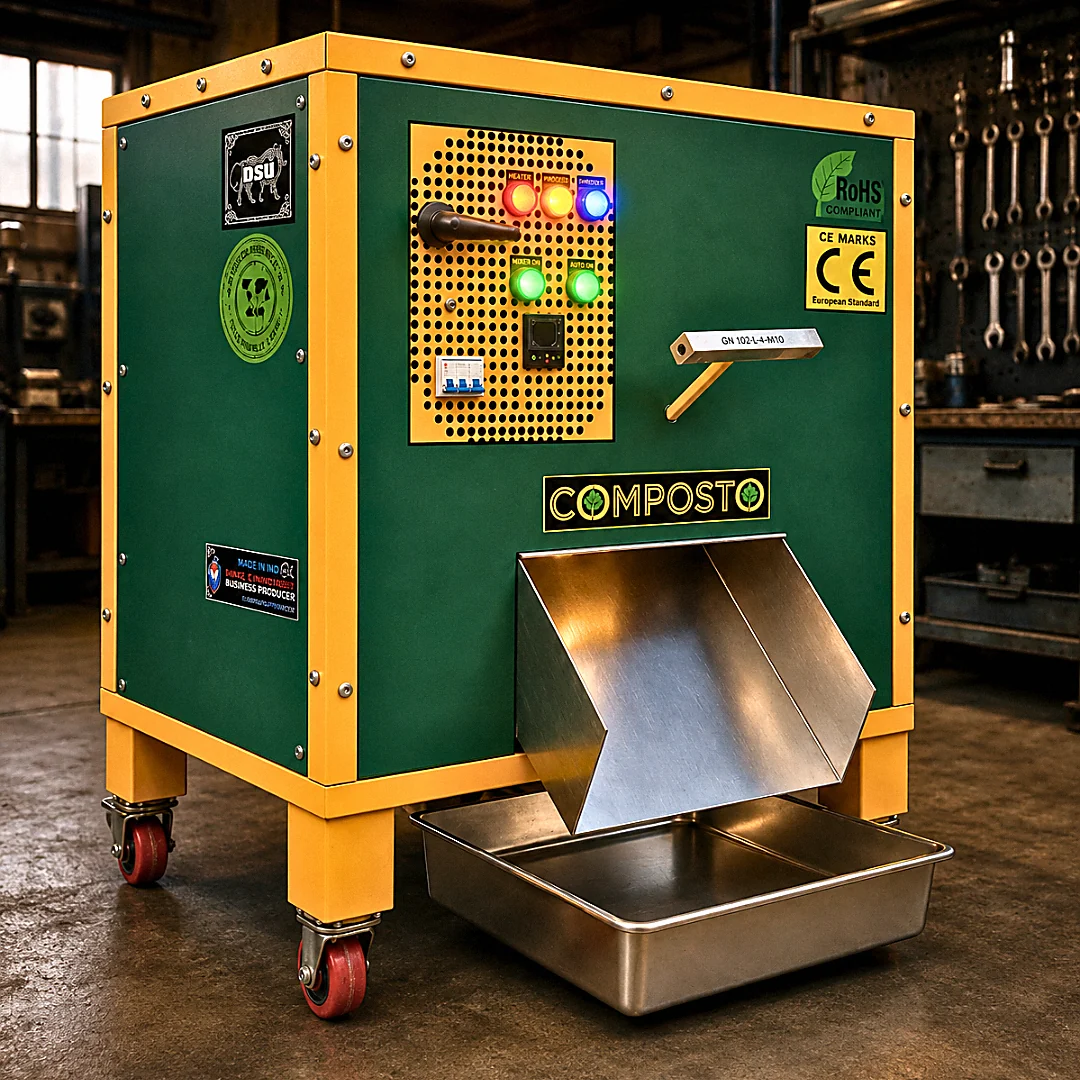
Use measured organic waste from Patiala to shortlist a capacity, then open its product page for dimensions, connected load, construction and controls.
Patiala waste-management context
For Patiala, the machine is one processing component; segregation, operator responsibility and the routes for other waste streams remain equally important.
Read the national 2026 framework alongside current Patiala directions. For Patiala, let the rule define responsibilities while measured organic-waste data determines the equipment shortlist.
Institutional, healthcare, hospitality and residential properties should assess current Bulk Waste Generator duties under the Solid Waste Management Rules, 2026 and local directions. Segregation and proper handling of non-organic or regulated streams remain essential.
Patiala site planning
For Patiala, delivery access, utility-space conditions and the operating routine should be clear before the final installation plan is locked.
For Patiala, share the locality, facility type, active meal windows, measured daily organic waste and site-access information. For hostels or campuses, mention whether long academic breaks materially reduce occupancy.
It shows whether one meal period dominates the load and helps operators understand when the machine will receive most of its daily feed.
Usually the normal operating period is more important, but recurring low-occupancy months should be recorded because they affect utilisation.
No. Biomedical and other regulated waste must remain completely outside the OWC stream.
Measure representative functions and note how often those peaks occur rather than sizing only from the largest event ever hosted.
Use the Organic Waste Converter Price page; this Patiala page stays focused on local operating fit.
Patiala quotation checklist
For Patiala, share the facility type, measured daily organic-waste quantity and the site conditions that affect installation. Those Patiala inputs are enough to identify the COMPOSTO capacity worth reviewing first.


