
Ashrams & retreats
Community kitchens can create predictable vegetarian food streams, but packaging and ritual/non-food materials still need separate routes.
River-sensitive OWC guide · Rishikesh
Rishikesh has ashrams, yoga retreats, hotels, hostels, cafés and institutional kitchens close to a river-sensitive environment. The best local OWC plan begins with segregation: which part of the property’s daily waste is actually clean biodegradable food or garden material suitable for processing on-site?
Rishikesh planning tool
Choose what you intend to process, remove unsuitable material from the route and use the measured clean organic stream for capacity.
Keep the biodegradable stream identifiable from source to loading point at the Rishikesh site.
Rishikesh buyer fit
Rishikesh buyers should start with the organic stream they actually generate and the way that stream moves through the property.
Community kitchens can create predictable vegetarian food streams, but packaging and ritual/non-food materials still need separate routes.
Occupancy and group stays can shift kitchen load; measure normal and retreat/group peaks.
Food preparation waste is easy to isolate if front-of-house packaging is kept out of the organic bin.
Central kitchens can build a clean feed stream when collection responsibilities are clearly assigned.
Rishikesh operating reality
Rishikesh has its own operating details to resolve before a quotation becomes an installation plan.
Keeping plastic, metal, glass and mixed refuse out of the organic stream is more important than adding another processing step to a mixed bin.
Processing suitable organics on-site reduces the amount of putrescible material that needs to be transported or stored, without making claims that one machine protects the river by itself.
Properties can compare ordinary occupancy with a representative retreat or festival period to decide how much recurring headroom is needed.
COMPOSTO range for Rishikesh
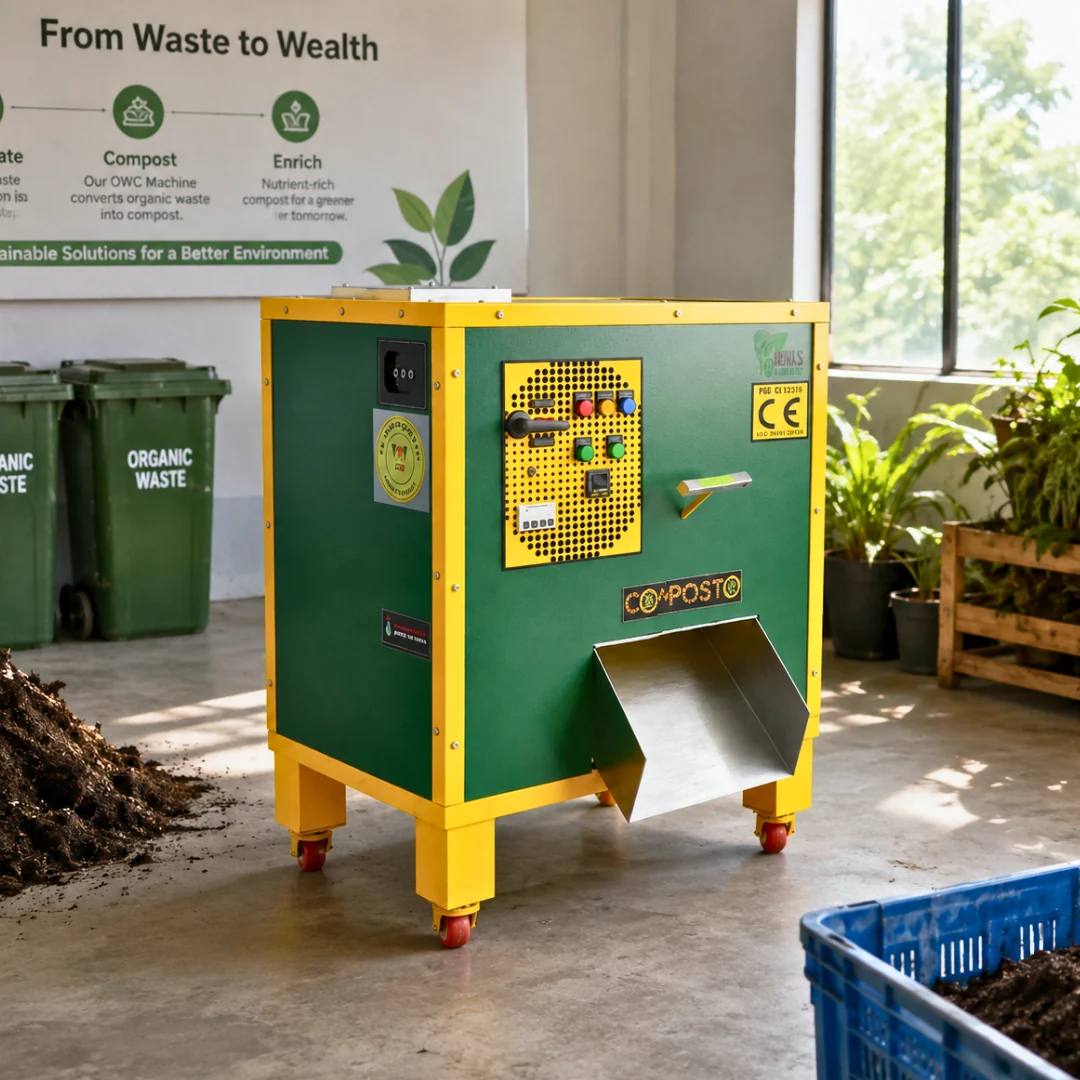
Use measured organic waste from Rishikesh to shortlist a capacity, then open its product page for dimensions, connected load, construction and controls.
Rishikesh waste-management context
For Rishikesh, the machine is one processing component; segregation, operator responsibility and the routes for other waste streams remain equally important.
Read the national 2026 framework alongside current Rishikesh directions. For Rishikesh, let the rule define responsibilities while measured organic-waste data determines the equipment shortlist.
Rishikesh properties should follow current local directions and the Solid Waste Management Rules, 2026. Source segregation is foundational: the OWC should receive a suitable organic stream, not mixed municipal waste.
Rishikesh site planning
For Rishikesh, delivery access, utility-space conditions and the operating routine should be clear before the final installation plan is locked.
Share the locality, property type, measured clean organic load and whether the site is an ashram, hotel, hostel or restaurant. Also send access and utility-space information, especially for dense lanes or hillside approaches.
Only suitable segregated biodegradable organic material. Packaging, glass, metal, sanitary waste and other unsuitable streams should stay out.
No. Source segregation should happen before waste reaches the processing equipment.
Measure a normal operating period and a representative retreat or group period, then compare how often the higher load recurs.
Because a clean organic stream reduces contamination and shortens the waste chain; a mixed stream undermines on-site processing.
Use the dedicated Organic Waste Converter Price page; this Rishikesh page is focused on clean-stream selection.
Rishikesh quotation checklist
For Rishikesh, share the facility type, measured daily organic-waste quantity and the site conditions that affect installation. Those Rishikesh inputs are enough to identify the COMPOSTO capacity worth reviewing first.


