
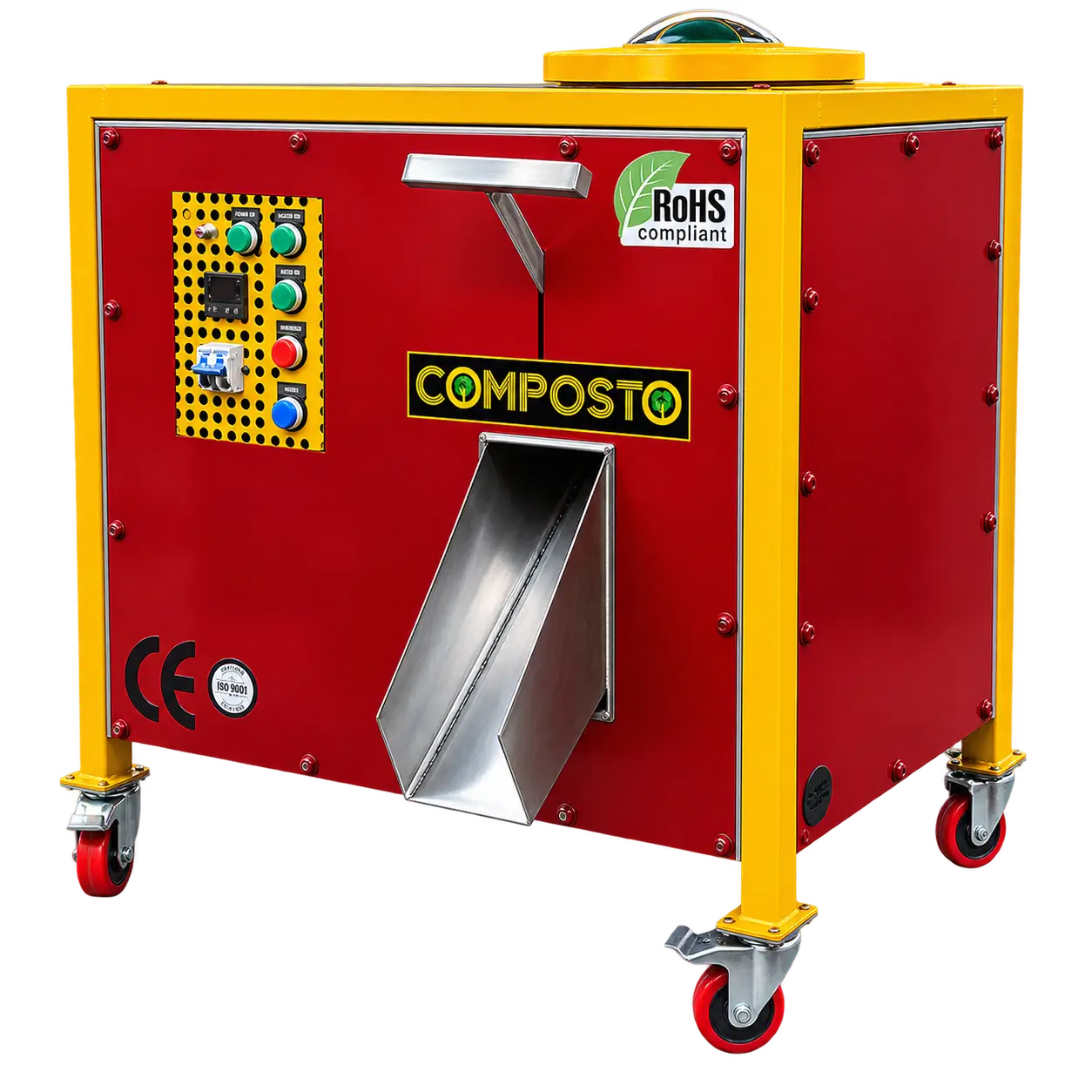
10–50 kg/day
Compact VEER models
Explore published GST-inclusive models for small resident clusters, community kitchens or carefully measured low-volume sites.
View Factory Store & prices →COMPOSTO by DSC Engineering · RWA & Apartment Waste Solutions
A practical way for RWAs and facility managers to select an Organic Waste Converter based on actual segregated kitchen waste—not an assumed kg-per-flat figure. Plan the capacity, space, utilities and operating workflow before requesting a quotation.
01 / Plan the right capacity
Enter your own estimates, or preferably use 7–14 days of weighed, properly segregated food waste. The starting assumptions below are editable planning examples, not measured DSC guarantees or regulatory norms.
Exclude plastics, sanitary waste, glass, large branches and other non-compatible waste. Model selection also depends on waste composition, loading schedule, and product-specific conditions.
Estimated segregated wet waste
90 kg/dayPlanning capacity including margin
108 kg/dayPreliminary size only—confirm with measured waste and DSC Engineering.
View suitable machineThis is a sizing aid, not a performance guarantee or a quotation. Large societies may require phased loading, more than one machine or a different operating arrangement.
02 / Real equipment options
Individual published machine capacities are a better starting point than generic “flats served” claims. Compact VEER models may suit smaller sites; larger projects require technical review.
Explore published GST-inclusive models for small resident clusters, community kitchens or carefully measured low-volume sites.
View Factory Store & prices →
Evaluate one or more systems based on collection timing, available power, operator schedule and actual waste stream.
View 100 kg OWC →
Higher throughput projects need an engineered layout, segregation facilities, electrical review and planned compost handling.
View 500 kg OWC →See all COMPOSTO capacities on our OWC machine price and model comparison page.
03 / Before placing an order
Record daily food and compatible organic waste separately from dry waste and garden branches. Track weekdays and peak days.
Check vehicle/trolley access, covered working area, utilities, drainage needs, safe clearances and compost storage.
Assign trained operators for collection, feeding, cleaning, curing and end-product use. Electrical safety and proper earthing are essential.
Share waste measurements, site photographs, available electrical supply and expected project timeline so DSC can recommend a configuration.
04 / Avoid common sizing mistakes
Two societies with the same number of flats may produce very different volumes of segregated kitchen waste due to occupancy, eating habits, canteens, landscaping and collection practices.
Choose based on measured compatible waste; remember that garden trimmings, polythene and other unsuitable material may damage equipment or reduce processing effectiveness.
Explore real COMPOSTO projects →05 / Common questions
There is no universally accurate machine size per number of flats. Weigh daily segregated compatible food waste and allow for peaks, then compare with COMPOSTO model capacities.
Possibly, but it cannot be determined from flat count alone. Occupancy, waste quantities, segregation and daily loading schedule must be reviewed first.
Electricity usage depends on the selected model, cycle, duty hours and tariff. A credible per-flat cost requires the model’s actual consumption and occupied-flat count—not a universal fixed estimate.
Do not feed polythene, plastic or other non-compatible waste. Large grass, branches and woody material require separate handling unless a specific machine is designed and approved for them.
Site-specific installation, commissioning and operator training requirements can be discussed during quotation. Exact inclusions should be confirmed in the written offer.
Published VEER 10–50 kg/day models can be viewed in the factory store. For larger requirements, share measured waste and site details for a project-specific quotation.
Direct from DSC Engineering
Tell us your location, approximate occupied flats and, ideally, measured daily segregated kitchen waste. We will discuss suitable COMPOSTO capacity and site requirements.