
Receiving & segregation
Choose a washable receiving point for segregated kitchen and other approved organic waste. Keep incompatible plastics, grass and hard objects out of the feed stream.
COMPOSTO by DSC Engineering · Site & installation planning
Before finalising an Organic Waste Converter, evaluate where segregated waste will arrive, how operators will load it, what electrical supply is available, and where processed material will be cured and stored. Use this site-readiness guide to prepare an accurate enquiry.
01 / Site-readiness checklist
This interactive checklist is for preliminary planning. Requirements vary by machine model, building layout, safety assessment and written project scope. Select each item after verifying it on site.
Work through the checklist and share open items during your site assessment.
02 / Layout before equipment
Choose a washable receiving point for segregated kitchen and other approved organic waste. Keep incompatible plastics, grass and hard objects out of the feed stream.
Leave safe working space around loading, panels and maintenance points. Confirm handling route, floor strength and access with the selected model drawing.
Verify actual supply voltage, phase, cable route, protective devices and effective body earthing through a qualified electrician. Plan ventilation and wash-down safely.
Reserve space for curing or maturation where required, screening, storage and movement of finished material; machine discharge does not necessarily equal fully cured compost.
03 / Electrical planning
Do not size cables, sockets, MCBs, earthing or generator capacity from a generic “OWC machine” rating. Electrical needs vary with the model, connected load, starting behaviour, installation distance and site conditions.
Safety note: An authorised electrical professional must finalise cable/protection selection and verify earthing and site compliance before energising equipment.
04 / Equipment selection
Site requirements change substantially between compact equipment and higher-throughput systems. Use a capacity as a starting point, then obtain the model-specific GA drawing and utility schedule.
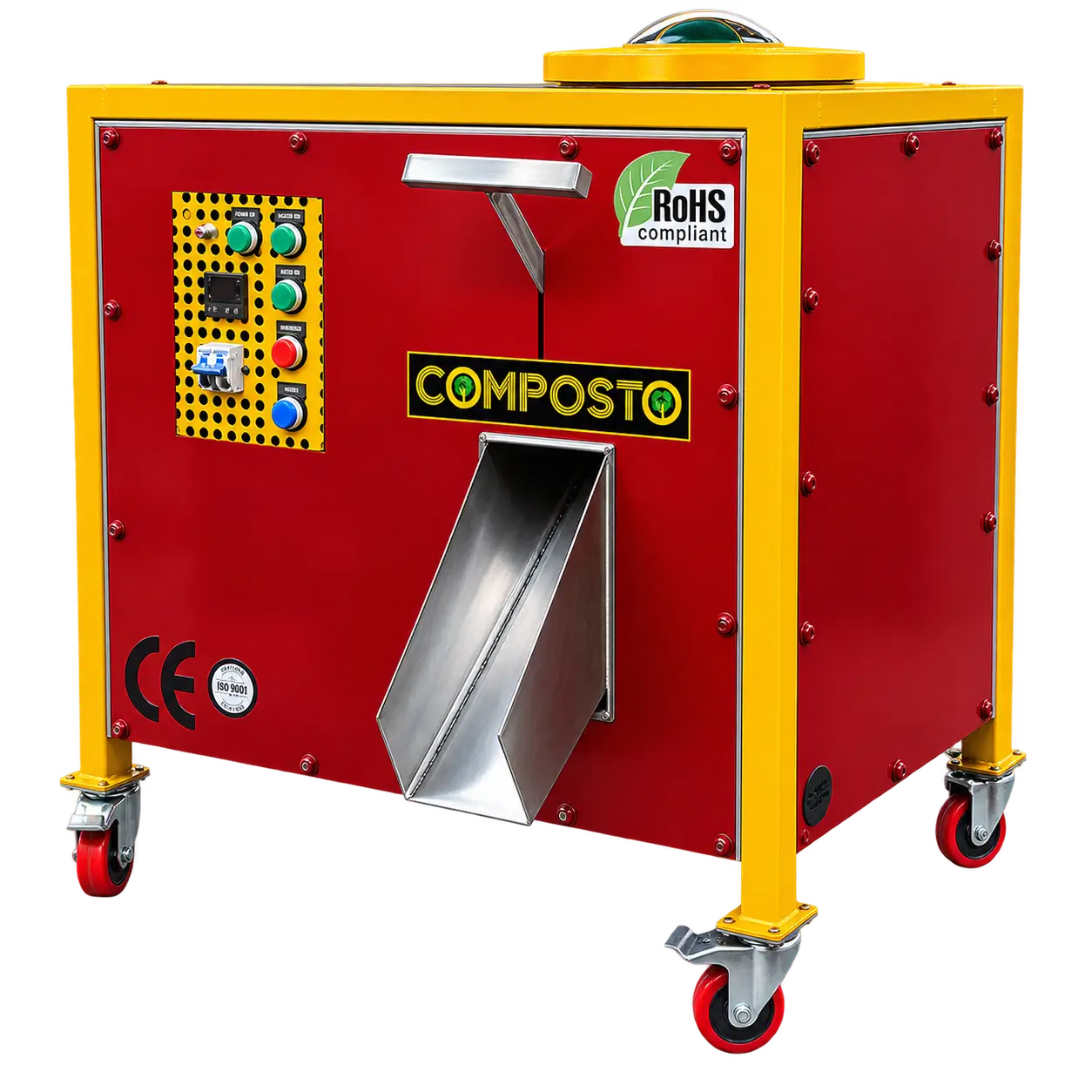
Review handling space, safe loading, service access and the exact electrical specification for the selected VEER model.
Compare VEER models →
Plan waste trolleys, segregation, operator workflow, utilities and curing storage with the machine layout.
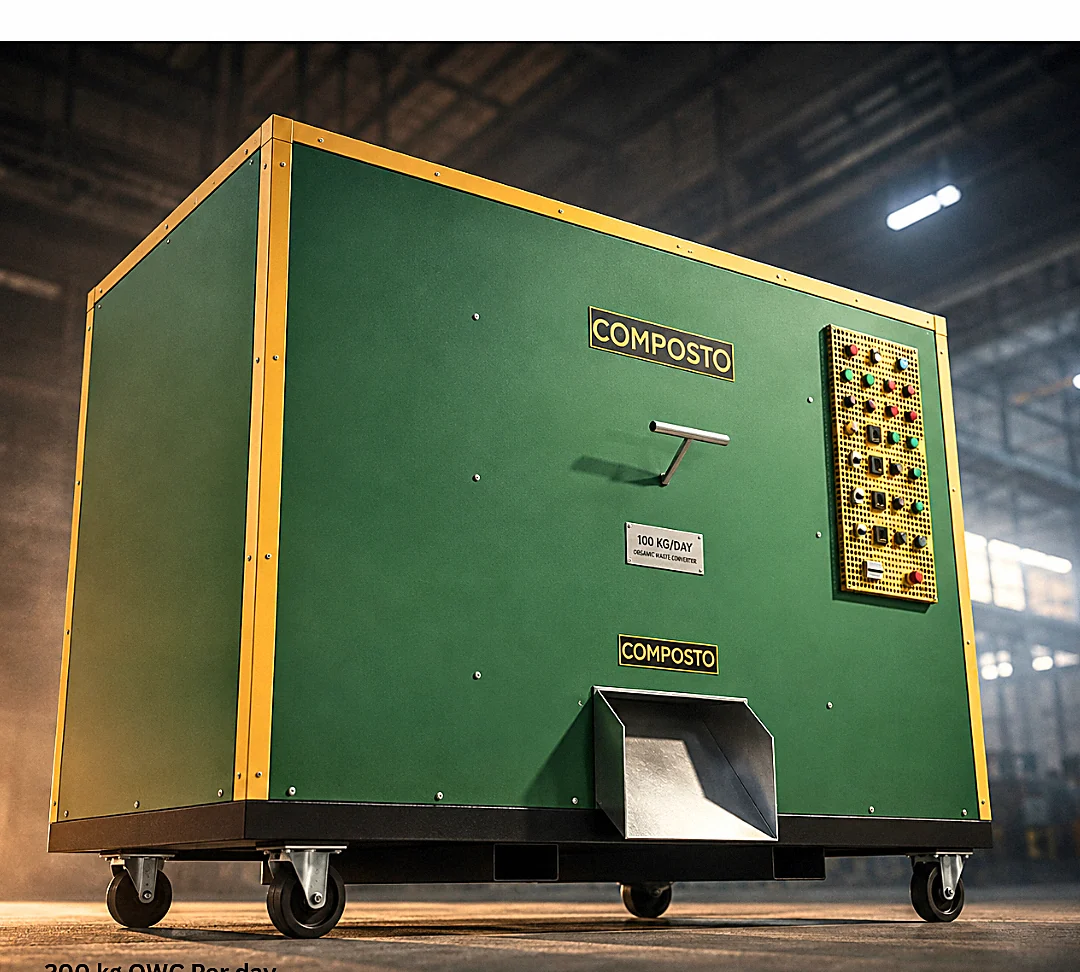
View 100 kg OWC →
Larger projects require an engineered site plan, material handling, electrical review and planned operations.
View 500 kg OWC →Explore the OWC model comparison and prices or installation references.
05 / Before requesting a quotation
A site assessment is more accurate when we can review the actual site rather than rely only on a nominal kg/day target.
06 / Installation questions
There is no reliable universal footprint. The machine dimensions are only one part of the layout; provide adequate segregation, loading, maintenance, circulation and curing/storage space. Confirm clearances from the selected model drawing.
It depends on the model. Some compact models may use single-phase supply while larger equipment can have different electrical needs. Confirm phase, voltage, load and protection on the exact quotation and electrical specification.
Yes. Proper protective earthing, isolation and applicable electrical safety measures should be verified by a qualified electrician before commissioning.
This depends on equipment configuration, housekeeping design and the particular site. Do not assume a fixed requirement; review the site plan and approved technical specification.
Location suitability depends on weather protection, electrical enclosure ratings and the approved machine/site design. A covered, accessible area is often preferable; obtain site-specific approval before placing equipment outdoors.
Processing and final compost curing are not always the same step. Plan suitable handling, maturation and storage according to the equipment process and material conditions.
Do not assume a universal foundation thickness or design. Review actual machine weight, dynamic loads and floor condition with the installation team and competent civil professional.
Share the proposed site details to discuss machine configuration, installation and commissioning scope. Final inclusions and responsibilities should be confirmed in the written offer.
Get a model-specific installation plan
Send your daily waste quantity, site photos and available electrical supply. DSC Engineering can discuss a suitable machine and the technical details needed before installation.