
Hotels
Breakfast, restaurant and room occupancy influence the regular kitchen stream; room count alone cannot predict kilograms of organic waste.
Hospitality OWC guide · Agra
Agra’s hospitality economy creates a distinctive organic-waste pattern: routine hotel kitchen waste can be joined by banquet, group-tour and event peaks. A local OWC plan should measure those peaks without turning heritage or environmental concerns into exaggerated sales claims.
Agra planning tool
Set your measured normal load, choose the kind of peak you regularly see and compare the capacity that gives practical headroom.
Agra buyer fit
Agra buyers should start with the organic stream they actually generate and the way that stream moves through the property.
Breakfast, restaurant and room occupancy influence the regular kitchen stream; room count alone cannot predict kilograms of organic waste.
A function can create a short, intense preparation and plate-waste peak that needs a separate operating plan.
Daily food-preparation patterns are often more consistent than hotel occupancy and can be measured directly over several normal days.
Campus kitchens and staff canteens benefit from predictable collection points and documented segregation responsibility.
Agra operating reality
Agra has its own operating details to resolve before a quotation becomes an installation plan.
Record a normal occupied day and a representative banquet or group day. The difference shows whether capacity or operating schedule needs extra headroom.
Agra’s TTZ context makes responsible waste handling especially relevant, but an OWC should be presented as an on-site organic-waste tool—not as a claim that one machine solves every environmental obligation.
A covered utility zone, clean waste route, drainage and trained staff help keep the processing function separated from guest circulation.
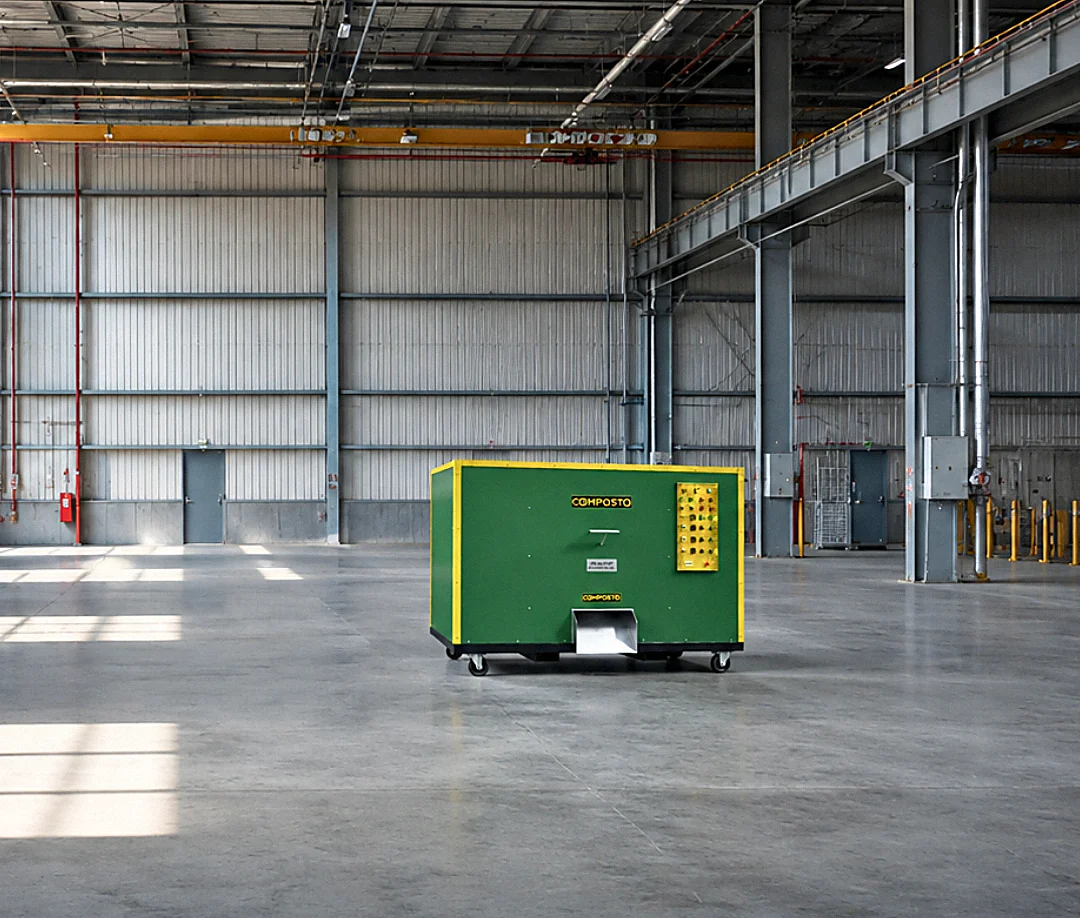
COMPOSTO range for Agra
Use measured organic waste from Agra to shortlist a capacity, then open its product page for dimensions, connected load, construction and controls.
Agra waste-management context
For Agra, the machine is one processing component; segregation, operator responsibility and the routes for other waste streams remain equally important.
Read the national 2026 framework alongside current Agra directions. For Agra, let the rule define responsibilities while measured organic-waste data determines the equipment shortlist.
Hotels, institutions and other qualifying Bulk Waste Generators should check current local requirements together with the Solid Waste Management Rules, 2026. Keep source segregation, on-site organic processing and management of non-organic streams as separate responsibilities.
Agra site planning
For Agra, delivery access, utility-space conditions and the operating routine should be clear before the final installation plan is locked.
For an Agra hospitality site, share the area, measured normal organic load, typical banquet or group-day pattern, utility-space access and power. This lets the team discuss a machine that fits operations rather than merely the property’s room count.
No. Occupancy, restaurant covers, banquet activity and kitchen style can produce very different waste loads at hotels with the same room count.
Measure a representative event and compare it with the normal daily load. Recurring peaks may justify more capacity or a different operating plan.
No. TTZ context increases the importance of responsible waste handling, but machine capacity still comes from actual organic-waste load and site conditions.
No. Packaging and other dry materials should be removed through source segregation before the organic stream reaches the machine.
The price-focused information is on the Organic Waste Converter Price page; detailed comparisons are on All Models.
Agra quotation checklist
For Agra, share the facility type, measured daily organic-waste quantity and the site conditions that affect installation. Those Agra inputs are enough to identify the COMPOSTO capacity worth reviewing first.


