
Heritage hotels
Restaurant service and occupancy create the base load; destination events can create a very different peak.
Hospitality + event OWC guide · Rajasthan
Rajasthan’s hospitality market can combine routine hotel kitchens with destination weddings, large banquets and seasonal tourism. The most useful OWC plan separates the normal day from recurring event peaks and checks whether the utility area is protected from heat, dust and guest circulation.
Rajasthan planning tool
Set the normal organic load, select the event pattern and see how recurring banquet service changes the capacity worth comparing.
Rajasthan buyer fit
Rajasthan buyers should start with the organic stream they actually generate and the way that stream moves through the property.
Restaurant service and occupancy create the base load; destination events can create a very different peak.
Catering prep and plate waste may arrive in concentrated windows, so event frequency matters as much as event size.
Campus dining has a steadier profile and should not be sized like a banquet property.
Canteen organics can be processed separately from manufacturing, chemical or hazardous waste.
Rajasthan operating reality
Rajasthan has its own operating details to resolve before a quotation becomes an installation plan.
A one-off maximum can oversize a system, while recurring wedding weekends may justify planned headroom. Record what actually repeats.
Protecting the machine area from direct weather exposure, keeping drainage clear and separating it from guest movement supports routine operation.
A Jaipur hotel, Udaipur resort and Neemrana industrial site can have different freight and access conditions even with identical machine capacity.
COMPOSTO range for Rajasthan
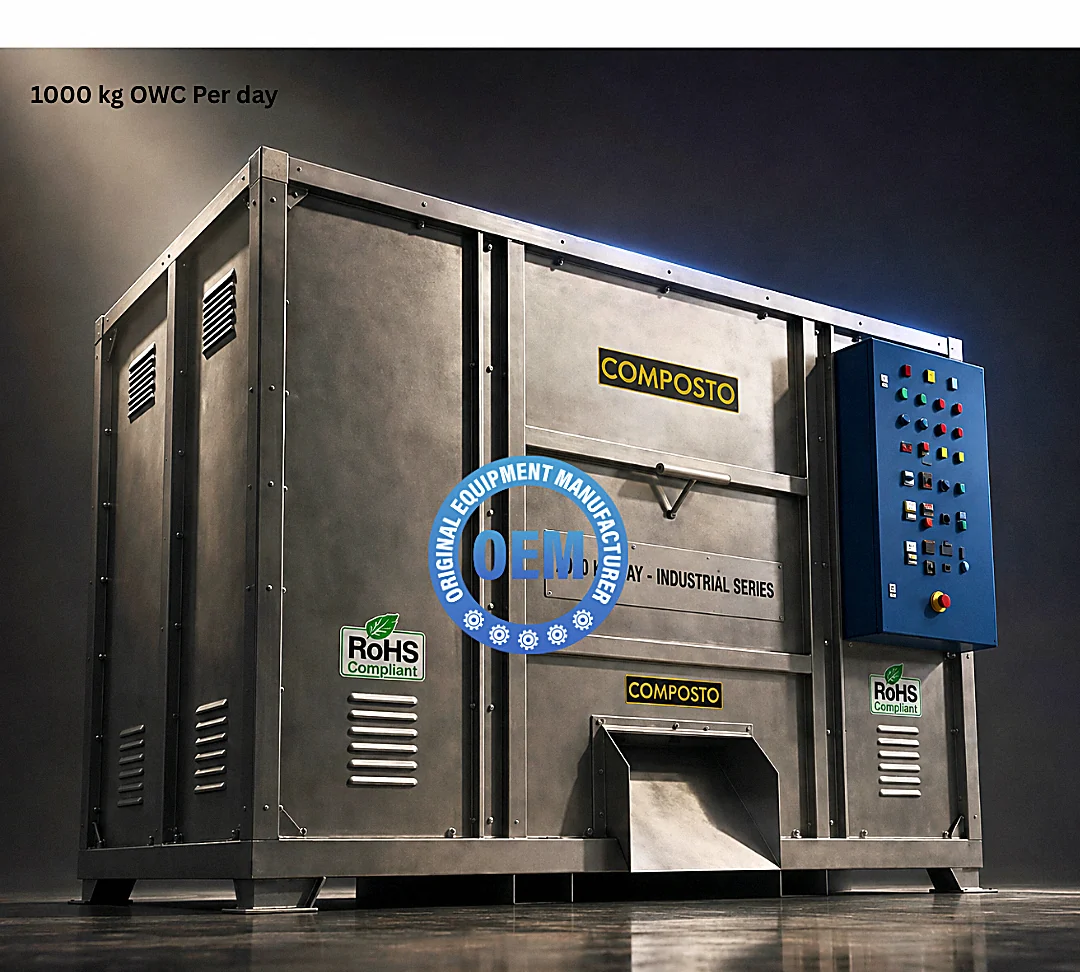
Use measured organic waste from Rajasthan to shortlist a capacity, then open its product page for dimensions, connected load, construction and controls.
Rajasthan waste-management context
For Rajasthan, the machine is one processing component; segregation, operator responsibility and the routes for other waste streams remain equally important.
Read the national 2026 framework alongside current Rajasthan directions. For Rajasthan, let the rule define responsibilities while measured organic-waste data determines the equipment shortlist.
Qualifying hospitality, institutional, residential and industrial properties should review applicable local directions and the Solid Waste Management Rules, 2026. Event-driven volume does not change the need for segregation at source.
Rajasthan site planning
For Rajasthan, delivery access, utility-space conditions and the operating routine should be clear before the final installation plan is locked.
For a Rajasthan site, share the city, property type, measured normal load, representative event load, event frequency, access conditions and proposed covered utility area. This creates a realistic operating picture before quotation.
Not automatically. Record representative recurring events and how often they occur, then compare them with the normal-day load.
The better plan is a practical back-of-house utility zone with access, drainage, power, ventilation and separation from guest circulation.
Capacity should follow the machine specification and actual waste load. Site protection and operating conditions are separate installation considerations.
No. Only suitable segregated biodegradable organic waste should be processed; industrial streams stay separate.
Use Organic Waste Converter Price for published price guidance; use the Rajasthan event-load planner above for capacity and site fit.
Rajasthan quotation checklist
For Rajasthan, share the facility type, measured daily organic-waste quantity and the site conditions that affect installation. Those Rajasthan inputs are enough to identify the COMPOSTO capacity worth reviewing first.


